

Views: 0 Author: Site Editor Publish Time: 2026-03-23 Origin: Site
In 2026, the world of air travel is undergoing significant changes, especially when it comes to carry-on luggage rules. Passengers and airlines alike are embracing new regulations that aim to streamline travel and enhance the flying experience. As these regulations evolve, understanding the new rules will ensure you avoid delays, unnecessary fees, and hassle. But what are the key changes for 2026, and how will they impact your next trip?
In this article, we’ll explore the updated carry-on luggage rules for 2026, delve into the technology and manufacturing processes behind the luggage, and provide you with the best tips for compliance.
As the world becomes more interconnected, air travel is seeing an increasing demand for faster, smoother journeys. Carry-on luggage, once a simple convenience, has now become an essential part of modern air travel. With rising concerns over baggage handling times, gate-checking, and security, airlines have been adjusting their carry-on luggage regulations in response to technological advancements and passenger feedback.
These changes are designed to improve efficiency, security, and the overall experience of flying. For example, luggage manufacturers, including those who use equipment like Vacuum Forming Machines and CNC Precision Cutting Machines, now create luggage products that are more consistent in size and shape, making it easier for airlines to enforce these new rules. This technology ensures that luggage manufacturers meet airline standards, creating bags that can withstand the rigors of travel and comply with evolving guidelines.
Understanding these new rules will help you avoid additional fees and prevent delays at the airport. Let’s dive into the most important updates regarding carry on luggage in 2026.
In 2026, the primary focus for carry-on luggage regulations will be on size, weight, and security. These three elements are critical to the overall efficiency of airlines, security processes, and passenger convenience.
A carry-on bag is defined as the luggage you can bring with you into the cabin of the airplane, as opposed to checked luggage, which is stored in the cargo hold. The regulations around carry-on luggage are determined by individual airlines, with a focus on creating standardization across the industry.
As airlines implement new rules in 2026, one of the biggest shifts will be toward standardized measurements and weight allowances to avoid inconsistencies across different airlines and regions.
One of the most significant changes to the carry-on luggage rules for 2026 is the increase in carry-on size limits. Airlines around the world are agreeing to new standards that allow for slightly larger dimensions while still ensuring that bags remain manageable and can fit easily in overhead compartments.
In 2026, most airlines will standardize the maximum size for carry-on luggage to approximately 22 x 14 x 9 inches (56 x 36 x 23 cm), slightly larger than what was allowed previously. However, it is important to note that airlines still retain the right to set their own specific limits, which may vary by a few centimeters or inches.
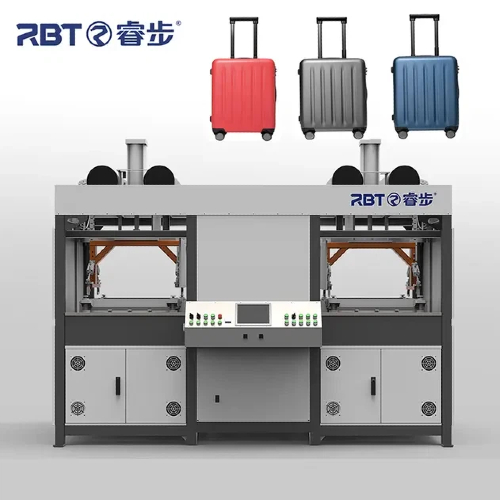
This update is made possible by modern luggage manufacturing technologies such as those found at RBT Machinery, whose Vacuum Forming Machines ensure that hard-shell luggage is produced with consistent dimensions, reducing the possibility of bags that do not fit airline specifications.
Table 1: Standard Carry-On Luggage Size Limits in 2026
Region | Max Dimensions (L+W+H) | Max Weight | Notes |
North America | 22 x 14 x 9 inches | 15–22 lbs (7–10 kg) | Common for U.S./Canada carriers |
Europe | 55 x 40 x 23 cm | 10 kg | Standard for European carriers |
Asia & Middle East | 56 x 36 x 23 cm | 7–10 kg | Varies by airline region |
International (General) | 56 x 45 x 25 cm | 10 kg | Default benchmark size |
In addition to the size increase, airlines are also imposing stricter weight restrictions on carry-on luggage. Passengers will now need to ensure that their luggage doesn’t exceed specific weight limits, ranging from 7–10 kg (15–22 lbs), depending on the airline and destination.
These weight limits are meant to prevent overloading the overhead compartments, which can impact the overall safety of the flight and cause delays during boarding. The updated rules also reflect the airlines' focus on fuel efficiency, as lighter luggage reduces the overall weight of the aircraft, contributing to better fuel consumption.
Manufacturers of luggage, like those using CNC Precision Cutting Machines, are producing bags that are both strong and lightweight, using materials such as polycarbonate and ABS plastic. These materials allow luggage to be durable without adding unnecessary weight, helping travelers meet the new weight restrictions with ease.
As part of the evolving carry-on luggage rules, 2026 will bring updated security guidelines focused on the contents of your carry-on bag. These changes are aimed at improving airport security and minimizing delays during the screening process.
In 2026, passengers will still need to comply with the 3-1-1 rule for liquids, which means:
Liquids, gels, and aerosols must be in containers of 3.4 ounces (100 milliliters) or less.
All liquid items must be placed in a single, clear, quart-sized plastic bag for screening.
This rule is unlikely to change, but ongoing improvements in screening technology, such as body scanners and liquid scanners, may help streamline the process.
Laptops, tablets, and other electronics will still need to be removed from carry-on bags during security checks. Additionally, airlines are increasingly focused on lithium-ion battery regulations, which may require batteries to be removed and placed in a separate bin.
Security guidelines are influenced by new screening technologies, and luggage manufacturers are adapting to these regulations by designing bags with built-in compartments for electronics and battery packs, making the security process easier for passengers.
Another significant change in the luggage world is the rise of smart luggage. By 2026, more and more travelers will be using luggage that features integrated technology such as GPS tracking, USB charging ports, and smart locks. These innovations aim to improve the traveling experience by making luggage more convenient and secure.
The manufacturing of smart luggage relies heavily on modern machinery, including CNC machines, extruder machines, and Vacuum Forming Machines from companies like RBT Machinery. These machines help ensure that luggage can accommodate the additional components required for smart technologies without compromising on durability or size.
As airlines continue to adapt to these new carry-on luggage rules, it’s essential to stay ahead of the curve. Here are some practical tips to help you prepare for your next flight:
Before you head to the airport, measure your carry-on luggage and weigh it. Use a luggage scale to ensure you meet the size and weight requirements. If your bag exceeds the airline’s limits, you may be forced to check it in.
Opt for luggage with adjustable or expandable features. This allows you to adapt to slight variations in size requirements, especially when traveling between different regions.
Not all airlines have the same carry on policies. Before traveling, check the specific airline’s website for size and weight limits to avoid surprises at the airport.
Manufacturers that use cutting-edge technology, such as those employing Vacuum Forming Machines and Sewing Machines, are producing bags that comply with these flexible rules, ensuring that you can travel without any issues.
The carry-on luggage rules we see today are likely to evolve further. As airports adopt new technologies, luggage manufacturers will continue to improve their designs to keep up with the changing travel landscape.
For example, innovations in smart luggage and biometric scanning could lead to even more personalized luggage experiences in the near future. Luggage manufacturers will rely on CNC Machines, Extruder Sheet Machines, and other technologies to produce bags that can handle these innovations without compromising on the fundamental purpose of the bag.
The carry-on luggage rules in 2026 are designed to enhance efficiency, safety, and the overall travel experience. With updated size and weight restrictions, new security measures, and the integration of smart technologies, the world of air travel is evolving rapidly. Understanding and adhering to these new guidelines will ensure that you have a smooth journey without unnecessary delays or extra fees.
The luggage manufacturing industry plays a significant role in these updates, with companies like RBT Machinery ensuring that luggage products meet the latest standards. By investing in advanced manufacturing equipment, luggage makers continue to deliver high-quality, durable, and functional bags that comply with the most stringent travel regulations.
Q1: What is the maximum carry-on luggage size allowed in 2026?
A: The maximum dimensions for carry-on luggage in 2026 are approximately 22 x 14 x 9 inches (56 x 36 x 23 cm), although individual airlines may have slight variations in their policies.
Q2: Have weight limits for carry-on luggage changed in 2026?
A: Yes, airlines are now enforcing stricter weight limits, ranging from 7–10 kg (15–22 lbs) depending on the region and airline.
Q3: Do carryon rules differ by airline?
A: Yes, each airline has its own specific rules regarding size and weight limits for carry-on luggage, although global standards are being adopted.
Q4: How do luggage manufacturing machines affect compliance with carry-on rules?
A: Advanced manufacturing technologies, such as Vacuum Forming Machines and CNC Precision Cutting Machines, ensure that luggage is built to precise dimensions, helping manufacturers create compliant luggage that fits airline regulations.
Q5: Are there new security rules for items inside carry-on luggage in 2026?
A: Yes, while the basic rules for liquids and electronics remain, there are updates to lithium-ion battery regulations and other security measures, which travelers should be aware of before flying.


