

Views: 0 Author: Site Editor Publish Time: 2025-11-20 Origin: Site
The luggage manufacturing industry has come a long way from the days of manual stitching and handcrafting. With the advent of modern technology, the production of luggage has become more efficient, precise, and cost-effective. Luggage manufacturing machines play a crucial role in this transformation, enabling manufacturers to produce high-quality products in large quantities while maintaining consistency and reducing costs.
In this article, we will explore the various technologies that power luggage manufacturing machines. From automation and robotics to cutting-edge software systems, we will examine how these technologies are revolutionizing the way luggage is made and how manufacturers are able to meet the growing demand for quality luggage.
Traditionally, the production of luggage was labor-intensive. Skilled workers would manually sew fabric, stitch seams, attach zippers, and assemble hard-shell suitcases by hand. While this process was effective, it was time-consuming, costly, and prone to human error. As the demand for luggage grew, manufacturers needed a way to speed up production while maintaining quality and consistency. This is where automation came into play.
Automation in luggage manufacturing refers to the use of machines and technology to perform tasks that were previously done by human workers. Automated systems can handle everything from cutting and sewing to assembly and packaging, reducing the need for manual labor and improving efficiency. Automation also helps ensure that each product is made to the same exacting standards, ensuring consistent quality.
Today, automated machines perform many tasks in the luggage production process, including:
Cutting: Machines are used to cut fabric, leather, and hard materials such as plastic and metal with precision.
Sewing: Automated stitching machines sew seams, attach zippers, and reinforce fabric.
Assembly: Robots and automated systems can assemble luggage parts, such as attaching handles, locks, and wheels.
Quality control: Vision inspection systems and AI-powered cameras can check for defects, such as irregular stitching or damaged components.
Robotics has become one of the key technologies in modern luggage manufacturing. Robotic systems are used to carry out tasks that require high precision, repetitive motions, or the handling of heavy components. These robots can significantly speed up the manufacturing process while ensuring accuracy.
In luggage manufacturing, robots are often used for the following tasks:
Robotic arms are commonly used to handle and assemble different parts of luggage, such as attaching handles, wheels, or locks. These robotic arms can be programmed to perform repetitive tasks, working at a much faster pace than human workers. Not only does this improve efficiency, but it also ensures consistency in the final product.
Robots equipped with advanced vision systems and sensors can inspect products for defects. These robots can detect flaws in stitching, surface imperfections, or alignment issues, making them ideal for quality control. By catching defects early in the process, manufacturers can reduce waste and ensure that only the highest-quality products reach the consumer.
Luggage manufacturing involves handling a variety of materials, including textiles, plastics, metals, and leather. Robots are often used to move these materials between different stages of production, from cutting and stitching to assembly and packaging. This ensures that the workflow is smooth and reduces the risk of human error.
One of the core technologies used in luggage manufacturing is Computer Numerical Control (CNC). CNC machines are automated tools that are controlled by computers to perform precise cutting, drilling, and shaping of materials. These machines are widely used in the production of hard-shell luggage and other accessories that require high precision.
For example, CNC machines are used to cut the hard plastic or aluminum shells of suitcases with extreme accuracy. These machines can cut intricate designs or patterns into the material, ensuring that all parts are uniform and fit together perfectly. The precision of CNC machines also ensures that the luggage pieces are free from defects, improving their structural integrity.
CNC machines are also used in the production of accessories such as locks, clasps, and hinges, where precision is essential for functionality and safety.
Another significant technological advancement in luggage manufacturing is laser cutting. Laser cutting uses focused beams of light to cut through materials with extreme precision. This technology has revolutionized the way luggage manufacturers handle fabrics, leathers, and even hard-shell materials.
Precision: Laser cutting ensures that the edges of the materials are smooth and even, reducing the need for additional finishing work.
Efficiency: Laser cutting is fast and can handle a wide range of materials, making it ideal for high-volume production.
Customization: Laser cutting allows for intricate designs, logos, or patterns to be engraved into the material, adding aesthetic appeal to the luggage.
Reduced Waste: Because the laser can make precise cuts with minimal material loss, this technology helps reduce waste, contributing to more sustainable manufacturing processes.
Laser cutting is often used in the production of fabric and leather components of soft-sided luggage, such as backpacks, duffel bags, and carry-ons. It is also used in the creation of intricate patterns on the surface of hard-shell luggage.
Sewing is a crucial part of luggage manufacturing, especially for soft-sided bags and travel accessories. Traditional sewing methods were labor-intensive and required skilled workers to sew seams, attach zippers, and reinforce the fabric. However, automated sewing machines have revolutionized this process by increasing speed, consistency, and quality.
Automated stitching machines are capable of performing complex stitching patterns at high speeds, making them ideal for large-scale production. These machines can sew multiple layers of fabric, attach zippers, and reinforce seams in one go. The machines can be programmed to create a variety of stitch types, depending on the design and material requirements.
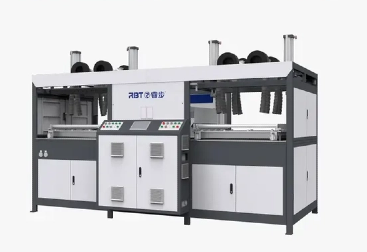
The modern luggage manufacturing process is highly reliant on sophisticated software and control systems. These systems allow manufacturers to monitor and control every aspect of production, from the design phase to the final assembly.
CAD software allows manufacturers to design luggage products digitally before they begin physical production. With CAD, manufacturers can visualize how the luggage will look, test its functionality, and make necessary adjustments before creating physical prototypes. CAD also helps create precise blueprints for CNC machines and automated stitching systems, ensuring that every part is manufactured to exact specifications.
ERP systems help manufacturers manage and track their entire production process, from inventory and material procurement to scheduling and delivery. By integrating data across different departments, ERP systems help manufacturers optimize their supply chain, reduce waste, and improve production efficiency.
RPA systems are used to automate administrative tasks such as data entry, order processing, and inventory management. This reduces the need for human intervention and helps ensure that manufacturing operations run smoothly without delays.
The adoption of advanced technologies in luggage manufacturing offers a wide range of benefits to manufacturers and consumers alike. Here are some of the key advantages:
Automation and robotics have drastically increased the speed of the production process. Tasks that once took hours or even days to complete manually can now be finished in a fraction of the time. This efficiency allows manufacturers to meet high demand and produce large quantities of luggage without sacrificing quality.
By using automated machines, manufacturers can ensure that every product is made to the same exacting standards. Whether it’s stitching, cutting, or assembly, technology ensures that every piece of luggage is consistent in terms of appearance, durability, and functionality.
Although the initial investment in technology can be high, automation and advanced machinery ultimately save manufacturers money in the long run. Reduced labor costs, minimized waste, and increased throughput all contribute to cost savings and higher profitability.
Technology has enabled manufacturers to offer more customized products to consumers. Whether it’s designing unique patterns, adding logos, or offering bespoke colors, the flexibility of modern machinery allows manufacturers to meet diverse consumer demands and create innovative luggage designs.
The technology behind luggage manufacturing machines has fundamentally transformed the way luggage is produced. With innovations in automation, robotics, laser cutting, CNC machining, and sewing, manufacturers are able to produce high-quality, durable, and stylish luggage more efficiently than ever before. These advancements have not only improved manufacturing speed and accuracy but have also contributed to cost savings, waste reduction, and product customization.
As the luggage industry continues to evolve, we can expect further technological advancements that will further enhance the production process. Whether you’re a manufacturer or a consumer, the continued integration of technology in luggage manufacturing will ensure that high-quality products are delivered faster, more sustainably, and at a better price.


