

Views: 0 Author: Site Editor Publish Time: 2025-11-12 Origin: Site
The luggage manufacturing industry is on the brink of a major transformation, driven by innovations in automation and design. In the face of rising demand for durable, stylish, and functional luggage, manufacturers are increasingly turning to cutting-edge technologies to streamline production, reduce costs, and enhance product quality. With advancements in robotics, artificial intelligence (AI), 3D printing, and sustainable materials, the future of luggage making looks promising, offering exciting possibilities for both manufacturers and consumers alike.
In this article, we will explore the most significant innovations that are shaping the future of luggage manufacturing. From enhanced automation processes to breakthroughs in design and material usage, the following trends are poised to revolutionize the way luggage is made and experienced by consumers.
Automation has already had a profound impact on the luggage manufacturing process, and its role is only expected to grow. In the coming years, automated systems will become even more advanced, reducing labor costs, improving efficiency, and increasing consistency across production lines. Automation is enabling manufacturers to scale production quickly while maintaining high standards of quality and precision.
Speed and Efficiency: Automated machines can perform repetitive tasks such as cutting, stitching, and assembling components much faster than manual labor, allowing manufacturers to meet growing demand.
Consistency and Precision: Automation reduces the risk of human error, ensuring that each product is made to the same high standards. From perfect stitching to accurate material cutting, automated systems deliver uniform results.
Cost Reduction: With less reliance on human workers and reduced waste, automation can lead to significant cost savings in the long run. Machines that work continuously, even during non-peak hours, increase overall production capacity without increasing labor costs.
Robotics: Robots are increasingly being used to handle repetitive tasks such as attaching handles, wheels, locks, and zippers. These robots work with high precision and speed, ensuring that the final product is durable and functional.
AI and Machine Learning: Artificial intelligence is being used to optimize production processes, monitor quality control, and even predict maintenance needs for machinery. AI-powered systems can analyze vast amounts of data in real-time, helping manufacturers make data-driven decisions.
Robotic Process Automation (RPA): RPA is used to automate administrative tasks like order processing, material tracking, and inventory management, allowing manufacturers to focus more on production and less on administrative overhead.
3D printing, also known as additive manufacturing, is another game-changing technology that is transforming the luggage-making industry. This technology allows manufacturers to create complex, customized designs quickly and cost-effectively, without the need for expensive molds or tooling.
Prototyping: 3D printing allows designers to create rapid prototypes of new luggage designs. This reduces the time and cost required to bring new products to market, as manufacturers can iterate and test designs faster. Traditional prototyping methods often involve expensive molds and time-consuming processes, while 3D printing can produce functional prototypes within hours.
Customization: One of the biggest advantages of 3D printing is its ability to create bespoke or personalized luggage components. Manufacturers can produce custom handles, locks, or compartments based on specific consumer preferences, providing a more tailored experience. This opens up opportunities for creating limited-edition designs or offering personalized travel gear, enhancing the appeal of the product to consumers.
Material Innovation: 3D printing also allows for experimentation with new materials, enabling manufacturers to develop lighter, more durable, and sustainable materials for luggage construction. This innovation can result in luggage that is not only functional but also eco-friendly, meeting the increasing demand for sustainable products.
As the global awareness of environmental issues continues to rise, the luggage industry is embracing sustainable practices to reduce its ecological footprint. From using recyclable materials to improving energy efficiency, sustainability is becoming a central focus in the manufacturing of luggage.
Recycled Materials: Many luggage manufacturers are exploring the use of recycled plastic, metal, and fabric to create eco-friendly products. For instance, recycled PET (rPET) is commonly used in the production of luggage fabric, which helps reduce plastic waste and promote circular economies. Recycled aluminum is also being used to create lightweight yet durable luggage shells.
Biodegradable Materials: Bioplastics, which are made from renewable plant-based materials, are gaining traction as an alternative to traditional plastics. These biodegradable materials offer the advantage of being environmentally friendly and can break down naturally without harming the planet.
Sustainable Packaging: In addition to sustainable luggage materials, packaging is also being revamped. Manufacturers are shifting to recyclable or biodegradable packaging to reduce waste. Even the use of eco-friendly adhesives and dyes is becoming a standard practice.
Reduced Carbon Footprint: By using recycled or biodegradable materials, manufacturers can significantly reduce their carbon footprint and contribute to a more sustainable future.
Consumer Demand for Eco-Friendly Products: As consumers become more eco-conscious, there is an increasing demand for sustainable products. Luggage that is made with environmentally friendly materials will appeal to the growing number of eco-conscious travelers.
Cost Savings: Using recycled materials or optimizing energy consumption in production can result in long-term cost savings for manufacturers.
The integration of smart technology into luggage has been one of the most exciting innovations in recent years. Smart luggage includes features such as built-in GPS tracking, biometric locks, USB charging ports, and even self-weighing scales. These innovations cater to the tech-savvy traveler who values convenience, security, and functionality.
GPS Tracking: Many modern suitcases now come with built-in GPS trackers, allowing travelers to track their luggage in real-time through a smartphone app. This feature offers peace of mind, especially in the event of lost or delayed luggage.
Biometric Locks: Biometric locks that use fingerprint recognition or facial recognition are being incorporated into luggage for added security. This feature ensures that only the authorized user can access the contents of the luggage, offering greater protection against theft.
USB Charging Ports: Some smart suitcases include built-in USB charging ports, allowing travelers to charge their devices on the go. This feature is especially useful for long-haul flights or layovers, ensuring that your devices stay powered up while traveling.
Self-Weighing Scales: Luggage with built-in weight sensors helps travelers avoid overweight baggage fees. These smart suitcases automatically calculate the weight of the luggage and provide feedback via a mobile app or digital display.
As travelers’ needs evolve, so do the designs of luggage. Modern consumers are looking for luggage that is not only functional but also comfortable and user-friendly. Manufacturers are increasingly focusing on ergonomic features that make travel easier and more enjoyable.
Modular Systems: Luggage with modular compartments allows travelers to organize their belongings more effectively. These modular systems can include detachable compartments for shoes, toiletries, or electronic devices, allowing for greater customization.
Ergonomic Handles and Wheels: The design of handles and wheels has been significantly improved in recent years. Telescoping handles with adjustable heights and ergonomically designed grips reduce strain on the user’s body, making it easier to maneuver heavy luggage. Likewise, 360-degree spinner wheels allow for easy navigation through crowded airports or train stations.
Lightweight Materials: Advances in materials technology have led to the development of lighter luggage that is just as durable as traditional models. Lighter luggage reduces the physical strain of carrying or pulling heavy bags, especially for long-distance travelers.
AI and data analytics are increasingly being utilized in luggage manufacturing to improve both production and product performance. From predictive maintenance to consumer behavior analysis, AI is helping manufacturers make smarter decisions.
Predictive Maintenance: AI-powered systems can monitor the condition of machinery and predict when a part might fail, reducing downtime and improving overall efficiency.
Product Design: AI algorithms can analyze customer preferences and help designers create products that meet specific consumer needs. By analyzing vast amounts of data, AI can predict trends and guide design decisions, ensuring that manufacturers stay ahead of the competition.
Supply Chain Optimization: AI can be used to optimize the supply chain by predicting demand, managing inventory, and ensuring that materials are available when needed.
The future of luggage manufacturing is poised for exciting developments, driven by innovations in automation, smart technology, sustainable practices, and design. As manufacturers adopt new technologies to meet evolving consumer demands, luggage will become smarter, more eco-friendly, and more user-centric. These advancements will result in luggage that is not only more durable and functional but also personalized and sustainable, enhancing the travel experience for consumers worldwide.
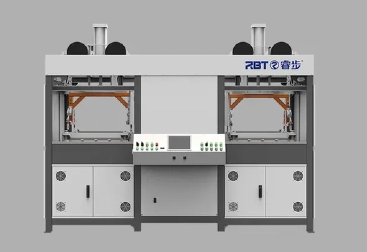
With companies like RBT Machinery at the forefront, the luggage industry is set to produce high-quality products more efficiently. Their state-of-the-art machinery and solutions are helping manufacturers stay competitive, ensuring that the luggage of the future is designed to meet the needs of the modern traveler. The coming years will undoubtedly bring even more exciting innovations, shaping the future of travel and making journeys more enjoyable.


