


Views: 0 Author: Site Editor Publish Time: 2026-04-14 Origin: Site


A luggage shell can meet the right size and shape and still fail to look consistent if the color drifts from sheet to sheet. That is why Luggage Making depends not only on forming and cutting, but also on stable control during luggage sheet extrusion. In hard-shell production, even a small color change can affect matching sets, delay approval, and create extra waste before assembly. RBT MACHINERY, with more than 25 years of experience in luggage production equipment, treats extrusion, forming, and cutting as one connected process, which is exactly the right way to control color shift before it becomes a costly downstream issue.
Color shift is easy to notice, but it does not always appear in the same way. Sometimes the problem is a gradual drift between batches, where one run looks slightly darker, duller, or warmer than the last. In other cases, the sheet shows streaks, swirls, dirty-looking transitions, or uneven gloss that makes the surface look visually unstable.
This distinction matters because different symptoms often come from different causes. A streak caused by contamination is not the same as a shade change caused by poor dispersion. A cloudy appearance created by overheating should not be treated the same way as color drift caused by unstable feeding. When operators treat every color issue as one problem, they often adjust the wrong variable and lose more time.
A luggage shell is a large, visible surface. Small color differences that might pass in other plastic parts become much more obvious on a suitcase, especially when products are displayed as sets or in several sizes under one design family.
This is even more important in modern hard-shell luggage because the market is moving toward cleaner and more premium-looking surfaces. The simpler the shell appearance, the more obvious color inconsistency becomes. That is why color control cannot be left until final inspection. If the sheet enters forming with visual instability, the problem is already moving through the rest of the production line.
One of the most common reasons for color shift is poor pigment or additive dispersion. If the formula is not mixed well enough, the final sheet may show local shade variation, streaking, or unstable surface appearance. In luggage sheet extrusion, this affects not only visual quality but also how confidently the sheet can move into forming.
Contamination is another major cause. Residual material left in the barrel, feed system, die area, or flow path can create dirty transitions or random marks after a color change. A line may appear stable at first, but leftover material can suddenly release and damage a sheet that should have been acceptable.
Weak changeover routines make the problem even worse. If purge steps are rushed, if dark colors are switched to lighter ones without enough cleaning, or if the line changes too quickly between recipes, the new run may start with contamination already built into it. Because luggage sheets are highly visible surfaces, poor transitions quickly become expensive.
Color instability is not always caused by contamination. It can also come from the way the material is processed. Excessive temperature, too much shear, or poor feed consistency can change how the final sheet looks, even when the recipe itself has not changed.
Feeding stability matters more than many operators expect. If the base resin, color masterbatch, or additives are not delivered consistently, the sheet can show shade fluctuation even when other settings appear unchanged. That is why color stability depends on the whole extrusion process, not only on pigment selection. Stable temperature, controlled screw speed, and accurate feeding all play a role in maintaining the final visual result.
Symptom | Likely cause | Fast check | Corrective action |
Batch-to-batch shade drift | Inconsistent temperature, feed, or color dosing | Compare recent settings and recipes | Standardize setpoints and dosing checks |
Streaks or swirls | Residual material or poor dispersion | Review changeover steps and flow path cleanliness | Purge thoroughly and improve mixing control |
Dirty transition marks | Incomplete color change procedure | Check previous color sequence | Extend purge routine and reset changeover steps |
Uneven gloss that changes apparent color | Overheating or unstable melt history | Check barrel and die temperature trend | Rebalance heat profile and reduce shear load |
Random dark specs | Degraded material or trapped contamination | Inspect barrel, die area, and feed zone | Clean trapped zones and remove degraded residue |
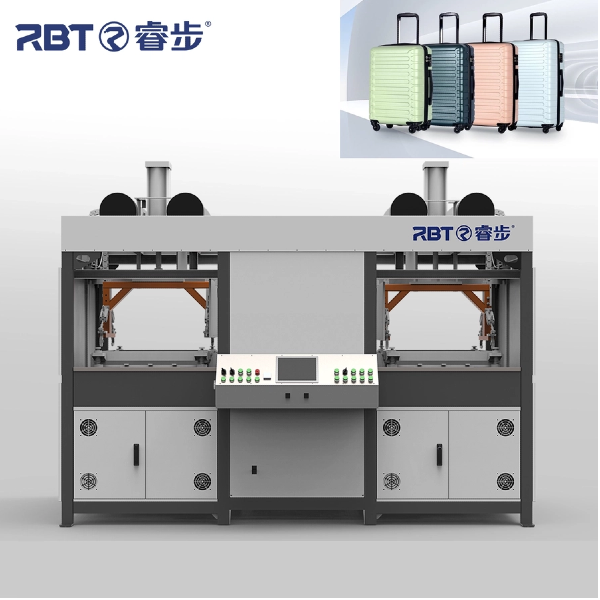
Preventing color shift starts before the first visible defect appears. The goal is to keep the process stable enough that the sheet enters forming with one clear visual standard. That means temperature control must be repeatable, screw speed must stay in a controlled range, and feeding must remain steady through the run.
Color control is therefore not only about pigments. It depends on how consistently the full material system moves through the extruder. A luggage line that wants fewer rejects needs not only the right recipe, but also stable thermal and mechanical conditions that keep the melt history predictable. Random adjustments after a defect appears usually make diagnosis harder. A tighter process window works better than reactive correction.
A disciplined changeover procedure is one of the fastest ways to reduce streaking and wasted sheet. Color shift after a change is often not a formula issue at all. It is a transition issue. Residual material from the previous run stays in the flow path, releases unevenly, and makes the next batch appear unstable.
The most effective improvements are usually simple. Plan dark-to-light transitions carefully. Define purge length by experience instead of guesswork. Standardize who approves the first acceptable sheet. Pay special attention to areas that tend to trap old material. For luggage sheet extrusion, cleaner switching protects appearance, reduces waste, and helps the next stage begin with a more reliable sheet.
A sheet with slight color instability may still look manageable at the extrusion stage and become unacceptable after thermoforming. Heating and shaping can make color variation appear stronger, especially on large shell surfaces where light reflects differently across curves, textures, and formed geometry.
That is one reason color problems should be controlled before the sheet reaches the mold. Once the surface has been shaped, a small inconsistency can look much larger. A sheet that seemed only slightly off may suddenly appear like a different color family when compared with the approved part.
When a luggage sheet is visibly mismatched, the cost is not limited to one defective part. The problem can delay forming approval, increase trimming waste, interrupt assembly, and affect final shipment of matching sets. If the factory is producing coordinated size families, the effect becomes even more serious because one unstable batch may affect several SKUs at once.
That is why color shift should be treated as a production-control issue, not only a cosmetic defect. A shell may still be dimensionally correct and yet fail commercially because the appearance no longer matches the approved standard.
Stable color is usually the result of repeatable habits, not last-minute rescue. A better workflow starts with checking incoming material condition, masterbatch quality, and changeover readiness before the run begins. After startup, the first acceptable sheet should be approved against a clear visual standard rather than memory. During production, in-line observation should focus on trend changes, not only obvious failure.
This approach is especially useful in luggage production because the sheet is feeding directly into a visible hard-shell product. Once extrusion, forming, and cutting are treated as one quality chain, color stability becomes easier to manage and less expensive to correct.
For teams focused on luggage making, preventing color shift is not about chasing defects after they appear. It is about building a controlled luggage sheet extrusion process so every sheet reaches forming with the same visual standard and the same chance of becoming a clean, market-ready shell. If you want to reduce waste, improve color consistency, and protect downstream shell quality, contact us to learn how RBT MACHINERY and our RBT suitcase Sheet Extruder machine can support your luggage production line.
Because luggage shells have large visible surfaces, even small shade differences are easy to notice. A color problem that might be acceptable in a hidden part can become a serious appearance issue in hard-shell luggage.
The most common causes are residual material from a previous run, contamination in the flow path, or weak changeover procedures. Poor dispersion can also create a similar result.
Yes. Temperature, screw speed, shear, and feed consistency can all influence how stable the final sheet looks during extrusion.
Because thermoforming can make slight inconsistency look more obvious, and once the shell is formed, trimming and assembly costs have already been added.


