

Views: 0 Author: Site Editor Publish Time: 2025-12-22 Origin: Site
The luggage sheet extrusion line plays a crucial role in the production of hard-shell luggage, where it is responsible for creating the plastic sheets that form the outer shell of the suitcase. This process involves melting raw plastic and forcing it through a mold to create continuous sheets, which are then cooled and solidified before being used in molding the luggage shell. The choice of materials, control over sheet thickness, and stringent quality control processes are essential to ensure the sheets are durable, lightweight, and suitable for the final luggage product. This guide will delve into the materials used in the extrusion process, the importance of controlling sheet thickness, and how quality control measures maintain consistency and ensure the final product meets high standards for strength, appearance, and functionality.
The luggage sheet extrusion process involves using various materials to create the plastic sheets for hard-shell luggage. The selection of material impacts the durability, weight, flexibility, and appearance of the final product. Here are the key materials used:
ABS (Acrylonitrile Butadiene Styrene)
ABS is commonly used for mid-range luggage due to its durability, lightweight nature, and cost-effectiveness. It offers decent impact resistance but may crack under extreme stress compared to other materials.
Polycarbonate (PC)
Polycarbonate is stronger, more flexible, and offers superior impact resistance. It's commonly used in high-end luggage, providing extra protection while keeping the suitcase lightweight.
Polypropylene (PP)
Polypropylene is lightweight and resilient, offering chemical resistance and good flexibility. It’s typically used for more affordable luggage options but offers less impact resistance than polycarbonate.
Factors to consider when selecting materials include:
Durability: Polycarbonate is the most durable, ideal for high-end luggage. ABS and polypropylene are more budget-friendly but still provide adequate protection.
Weight: Polypropylene is the lightest, making it ideal for luggage that emphasizes portability, while polycarbonate is lightweight yet durable.
Flexibility: Polycarbonate is the most flexible, offering excellent shock absorption, while ABS and polypropylene offer moderate flexibility.
Cost: ABS is the most affordable, making it ideal for budget options. Polycarbonate is pricier but provides enhanced durability and protection.
ABS: Offers decent impact resistance and strength at a lower cost but may be more prone to cracks under severe impacts.
Polycarbonate (PC): Known for its high impact resistance and flexibility, making it ideal for protecting fragile items. It also gives a premium look with a glossy finish.
Polypropylene (PP): Lightweight and highly resilient but offers less protection compared to polycarbonate, making it better for lighter use.
Controlling the thickness of the plastic sheets during the luggage sheet extrusion process is essential for ensuring the final product meets the desired durability, weight, and molding performance. Proper thickness control ensures that the luggage shell performs optimally while maintaining structural integrity and aesthetic quality.
The thickness of the plastic sheet directly impacts several key aspects of the final luggage product:
Durability: Thicker sheets offer better protection and impact resistance, which is essential for hard-shell luggage. Too thin a sheet may result in a less durable product that is prone to cracking or breaking upon impact.
Weight: The sheet thickness determines the weight of the final luggage. A balance is needed: while a thicker sheet may offer greater strength, it will also increase the weight, which is a critical factor for consumers looking for lightweight luggage.
Molding Performance: Consistent thickness ensures that the plastic sheet molds evenly during the vacuum forming or injection molding process, preventing defects like warping, bubbles, or uneven surfaces in the final product.
The extrusion process involves melting raw plastic and forcing it through a die to create continuous sheets. The extrusion machine controls the flow and thickness of the plastic to ensure a uniform sheet. By carefully adjusting the temperature, speed, and pressure, the machine can produce sheets with consistent thickness. The key to achieving uniformity is ensuring that the cooling process is also controlled to avoid discrepancies in sheet thickness across its length.
Several methods are employed to adjust and control the thickness during extrusion:
Die Adjustment: The extrusion die can be adjusted to control the flow of molten plastic. By changing the gap between the die plates, manufacturers can modify the sheet's thickness.
Roller Pressure: After the plastic is extruded, rollers help shape the sheet and compress it to the desired thickness. The pressure applied by these rollers can be adjusted to control the final thickness.
Temperature Control: The extrusion temperature affects how the plastic flows. Higher temperatures can make the material more fluid, allowing for thinner sheets, while lower temperatures may result in thicker, more rigid sheets.
Speed of Extrusion: The extrusion speed also affects thickness. Slower extrusion rates often lead to thicker sheets, while faster speeds can result in thinner material.
Ensuring the quality of luggage sheets during extrusion is essential for the final product’s durability and performance. Key quality control (QC) measures help detect issues early and maintain consistency throughout the process.
Visual Inspection:
Operators perform visual checks for defects like cracks, bubbles, or discoloration on the surface of the extruded sheets.
Thickness Measurement:
Thickness gauges or laser measurement tools ensure the sheet maintains consistent thickness throughout the process, crucial for molding and durability.
Material Testing:
Regular tests for strength, flexibility, and impact resistance ensure the plastic meets required performance standards.
To maintain consistency in material properties and thickness:
Control Process Parameters: Stable temperature, speed, and pressure settings ensure uniformity.
Monitor Cooling Systems: Consistent cooling prevents warping and ensures uniform thickness.
Batch Consistency: Use consistent raw materials for uniform quality from batch to batch.
Uneven Thickness:
Solution: Adjust die gap and roller pressure to ensure uniform thickness.
Bubbles or Voids:
Solution: Proper extrusion temperature and pressure prevent air pockets.
Surface Defects:
Solution: Routine inspections and proper cooling minimize defects.
Inconsistent Material Properties:
Solution: Regular material testing and careful control of process settings ensure consistent material performance.
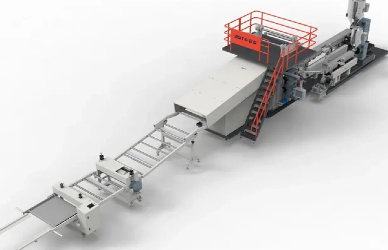
The luggage sheet extrusion line involves several types of machinery, each crucial for different stages of the extrusion process. These machines work together to ensure that the sheets produced are of high quality, meet design specifications, and are ready for further processing into hard-shell luggage.
Description: The extrusion machine is the heart of the extrusion process. It melts raw plastic and forces it through a die to form continuous sheets. This machine consists of a hopper for feeding the plastic, a heating system to melt it, a screw or auger to push the material through the die, and a die itself that shapes the melted plastic into the desired thickness and width for the luggage sheets.
Key Features:
Precise temperature control to ensure uniform melting of the plastic.
Screw speed adjustments to control the material flow.
Die configuration options for varying sheet thicknesses and widths.
Role: After the plastic has been extruded into sheets, it must be cooled to solidify and maintain its shape. Cooling systems play a critical role in this process by regulating the cooling rate and ensuring that the extruded sheets solidify evenly and maintain uniform thickness.
Types of Cooling Systems:
Water baths: Sheets are passed through water baths to rapidly cool and solidify the material.
Air cooling: For some materials, air cooling systems with controlled airflow are used to cool the sheets gradually.
Importance: Cooling systems help prevent issues like warping, uneven thickness, and distortion that can occur if the sheets are not cooled uniformly. The cooling process also affects the final material properties, such as rigidity and flexibility.
Role: Once the sheets have been extruded and cooled, they need to be cut into specific lengths or wound onto rolls for easy handling and further processing. Cutting and winding equipment is essential for these tasks.
Cutting Equipment: Typically includes rotary cutters or guillotine cutters that precisely cut the sheets into desired lengths or sizes based on production requirements.
Winding Equipment: The sheets may also be wound onto rolls using winding machines to facilitate storage and transportation to the next phase of production. The winding process ensures that the sheets are tightly and evenly coiled for further processing, such as molding or cutting
ABS, polycarbonate, and polypropylene are the most commonly used materials, each offering unique properties like durability, flexibility, and impact resistance.
Controlling thickness is essential for ensuring the durability, molding performance, and weight of the final luggage shell, as variations in thickness can lead to structural weaknesses.
Quality control is maintained through continuous visual inspections, thickness measurements, and material testing to ensure consistency and prevent defects.
Key equipment includes extrusion machines, cooling systems, and cutting/winding machines that ensure the sheet is formed, cooled, and prepared for further processing.
To sum up, the luggage sheet extrusion line is essential in producing high-quality plastic sheets for hard-shell luggage. The careful selection of materials, such as ABS, polycarbonate, or polypropylene, directly impacts the durability, weight, and overall performance of the luggage. Controlling thickness throughout the extrusion process is crucial for ensuring consistent strength and quality, while maintaining proper quality control through regular inspections and testing helps prevent defects and ensures the final product meets high standards. Moving forward, material innovation and automation are expected to enhance extrusion line efficiency and product quality, with new sustainable materials and advanced technologies offering improved performance and sustainability in luggage manufacturing.


