


Views: 0 Author: Site Editor Publish Time: 2025-12-08 Origin: Site


The luggage manufacturing process is an intricate journey that transforms raw materials into the high-quality suitcases we rely on for travel. This process involves multiple stages, each requiring specific technologies and machinery to achieve the desired result. From selecting the right materials to assembling the final product, every step is crucial for creating durable, functional, and aesthetically pleasing luggage. One of the key factors driving modern luggage manufacturing is automation, which has revolutionized the industry by increasing production speed, precision, and consistency. Additionally, material selection plays a critical role in determining the suitcase’s weight, strength, and durability, with plastics like ABS, PC, and PP being commonly used for hard-shell suitcases. Production line integration ensures that each stage of manufacturing, from extrusion and forming to cutting, sewing, and assembly, works seamlessly together, ultimately delivering a finished product that meets both functional and design standards. Understanding this comprehensive process is essential for appreciating the complexity behind the luggage we use every day.
The raw materials in luggage manufacturing are crucial to the product’s durability, weight, and appearance. The right material selection is key to ensuring the suitcase meets functional and aesthetic requirements.
ABS (Acrylonitrile Butadiene Styrene): Lightweight, impact-resistant, and durable, commonly used in hard-shell luggage.
PC (Polycarbonate): Known for its strength and flexibility, offering superior impact resistance.
PP (Polypropylene): Lightweight and flexible, ideal for cost-effective production.
Weight: Lightweight materials make luggage easier to handle.
Durability: Materials like polycarbonate provide strong protection against impacts.
Aesthetics: Different materials offer various finishes, affecting the suitcase's look and texture.
Zippers: Essential for smooth and secure opening/closing.
Hardware: Includes handles, locks, and hinges, ensuring functionality and durability.
Linings: Fabrics like nylon or polyester protect the interior of the luggage.
Wheels: Durable wheels provide smooth mobility, essential for ease of travel.
The first step in the luggage manufacturing process involves plastic extrusion, which is used to create the thin sheets that form the shells of luggage. This process is essential for shaping the raw plastic into the base material for hard-shell suitcases.
Plastic extrusion involves heating raw plastic until it softens and then passing it through an extruder. The extruder shapes the plastic into thin, uniform sheets that are later used to form the suitcase shells.
The raw plastic is heated to a precise temperature where it becomes malleable. It is then forced through a die to create continuous sheets of plastic. These sheets are cooled and hardened, ready for the next stage of production, typically vacuum forming.
The key machinery in this process is the Plastic Sheet Extruder (Extruder Sheet Machine). This specialized machine controls the temperature and pressure to ensure that the plastic sheets are of consistent thickness and quality, essential for producing durable luggage shells.
The next stage in the luggage manufacturing process is vacuum forming, where heated plastic sheets are shaped into the suitcase shell.
During vacuum forming, the pre-extruded plastic sheets are heated until they become soft and pliable. The sheet is then draped over a mold, and a vacuum is applied to suck the sheet tightly against the mold’s surface, forming the shape of the suitcase shell. The sheet is cooled and hardened into the desired form.
The key equipment used in this stage is the Vacuum Forming Machine (Luggage Vacuum Forming Machine). This machine controls the heating, molding, and cooling processes to ensure the plastic sheet takes the exact shape of the suitcase shell.
Vacuum forming offers several advantages:
Precision: It creates precise shapes and sizes, ensuring that each suitcase shell meets exact specifications.
Design Flexibility: This process allows for a variety of designs and styles, enabling manufacturers to produce different suitcase shapes, sizes, and finishes.
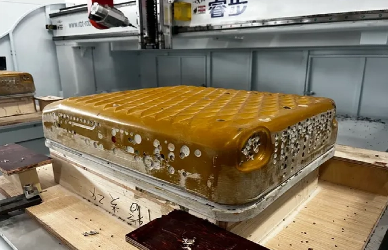
The third step in the luggage manufacturing process is CNC cutting and shaping, where the edges and detailed features of the suitcase shell are precisely cut.
During CNC cutting, the suitcase shell, which has been formed in the previous vacuum forming step, is placed into a CNC (Computer Numerical Control) machine. The machine uses a computer program to guide sharp cutting tools, ensuring precise, clean cuts along the edges and detailed areas of the suitcase shell. This step ensures that the suitcase has smooth, uniform edges and the necessary design features.
CNC cutting technology provides high precision by using computer-controlled tools to follow exact measurements and design patterns. This ensures that each suitcase has perfectly shaped edges and accurate design features, such as corners and curves, enhancing the overall finish of the product.
The main machinery used in this step includes CNC Cutting Machines and Edge Cutting Machines. These machines are designed to handle different materials and cutting needs, offering high precision and efficiency for shaping the suitcase shell.
Installing internal linings: These help protect the contents of the suitcase.
Attaching zippers: Essential for opening and closing the suitcase securely.
Adding accessories: Handles, straps, and other functional features are installed, ensuring the suitcase is fully functional for use.
The fifth step in the luggage manufacturing process is final assembly and quality control, where all components are brought together and thoroughly inspected before the suitcase is ready for distribution.
In this stage, all previously manufactured parts, such as the shell, internal lining, zippers, handles, wheels, and hardware, are assembled into the final product. The suitcase is then carefully inspected for any defects or inconsistencies. This final assembly ensures that every part fits properly, and the suitcase is fully functional.
Quality control is a critical part of this step. It involves thorough testing and inspection to ensure each suitcase meets stringent standards for:
Durability: The suitcase must withstand the stresses of travel, including handling and impact.
Strength: All parts, including handles, zippers, and wheels, are tested for strength and reliability.
Appearance: The final product is inspected for any cosmetic defects, ensuring it looks as expected with no scratches, dents, or blemishes.
The final step in the luggage manufacturing process involves packaging and distribution, preparing the finished suitcases for shipment to retailers and customers.
Once the suitcases are fully assembled and quality-checked, they are carefully packaged for protection during transportation. Each suitcase is typically wrapped in protective plastic or fabric to prevent scratches and other damage. Additionally, boxes or protective materials are used to safeguard the suitcase during the shipping process.
Proper packaging is essential to ensure the safe transportation of the suitcases. The packaging needs to:
Ensure Protection: Suitcases must be protected from potential damage, such as scratches, dents, or pressure marks during transit.
Maintain Integrity: The packaging should keep the suitcase in its optimal shape, especially for products with sensitive features like zippers, handles, or wheels.
Efficient Handling: Packaging should also be designed for easy stacking and handling in warehouses and on transportation vehicles.
Once packed, the suitcases are distributed through a network that ensures they reach retailers and customers in a timely manner. This can include:
Retailers: Large retail stores or online retailers that sell luggage to consumers.
Wholesalers and Distributors: Suitcases may be sent to wholesalers, who distribute them to smaller stores or international markets.
Direct-to-Customer: Some suitcases are shipped directly to consumers, especially for online orders.
The primary materials include ABS, PC, PP plastics, as well as fabrics and leather for soft-shell suitcases. Other components include hardware, wheels, zippers, and internal linings.
Vacuum forming involves heating a plastic sheet until it softens, then using vacuum pressure to mold it into a specific shape over a mold. This creates the suitcase shell's final form.
CNC cutting is a computer-controlled process that allows precise cutting of plastic, metal, and other materials. It ensures that the suitcase’s edges and shapes are accurate and consistent.
Quality control is performed throughout the production process, with rigorous standards for each stage, such as testing the durability, strength, and appearance of the suitcase to ensure it meets required specifications.
The future of luggage manufacturing is evolving rapidly with advancements in smart and automated technologies. Automation is transforming production lines, allowing for faster, more precise manufacturing processes, while smart technologies such as RFID tracking and built-in charging systems are becoming increasingly common in modern luggage designs. Additionally, the growing emphasis on sustainability is pushing the industry towards the use of eco-friendly materials, such as recycled plastics and biodegradable components, reducing the environmental footprint of luggage production. However, the industry faces significant challenges, particularly in managing global supply chain changes and adapting to stricter environmental regulations. As manufacturers navigate fluctuating material costs, shipping disruptions, and the need to comply with new sustainability standards, the ability to innovate and remain flexible will be key to staying competitive. The future of luggage manufacturing lies in embracing these technologies and challenges, creating products that are not only functional and stylish but also sustainable and smart.


