

Views: 0 Author: Site Editor Publish Time: 2025-12-15 Origin: Site
Choosing the right luggage making machine is crucial for optimizing your factory's production process, improving efficiency, and ensuring high-quality products. The machinery you invest in directly impacts the speed, precision, and cost-effectiveness of your manufacturing operations. Whether you’re producing hard-shell suitcases, soft-shell luggage, or custom designs, selecting the appropriate machine is key to meeting production targets and maintaining product consistency. With various options available, including extrusion machines, vacuum forming machines, injection molding machines, and more, it's essential to understand how each type of machine works and how it fits into your factory's unique needs. By considering factors such as production volume, material compatibility, and overall cost-effectiveness, you can make an informed decision that aligns with both your short-term and long-term manufacturing goals.
The luggage making machine industry includes several specialized machines, each designed to handle a specific stage of luggage production. Choosing the right type of machine depends on the type of luggage you plan to manufacture, the materials used, and the complexity of the designs. Below are the main types of luggage making machines:
Purpose: Extrusion machines are used to create plastic sheets, typically for hard-shell luggage production. The machine melts raw plastic material and forces it through a mold to form continuous sheets.
Functionality: These sheets are then cooled and ready to be used in further processes like vacuum forming or injection molding to create the shell of the luggage.
Material Compatibility: Suitable for materials such as ABS, polycarbonate (PC), and polypropylene (PP).
Purpose: Vacuum forming machines are used to mold plastic sheets into luggage shells by applying heat and vacuum pressure.
Functionality: The heated plastic sheet is placed over a mold, and a vacuum is applied to pull the sheet tightly over the mold’s surface, forming the shape of the suitcase shell. Once cooled, the shell is ready for assembly.
Material Compatibility: Often used with ABS, polycarbonate, and other plastic materials to create durable, lightweight luggage.
Purpose: Injection molding machines are used to create precise, intricate luggage designs by injecting molten plastic into a mold under high pressure.
Functionality: This method produces parts with complex shapes and fine details. It is ideal for producing hard, durable luggage with integrated features like locks, handles, and reinforced corners.
Material Compatibility: Commonly used for engineering plastics like polycarbonate, ABS, and nylon, which offer higher durability and strength.
Purpose: CNC (Computer Numerical Control) cutting machines are used to precisely cut and shape luggage components such as plastic shells, metal frames, and other detailed parts.
Functionality: These machines use computer-controlled tools to follow exact measurements, ensuring each cut is accurate and consistent. They are used to refine the edges of luggage shells and cut specific shapes or designs.
Applications: Ideal for high precision tasks, such as trimming and detailing luggage components.
Purpose: These machines are used for assembling soft-shell luggage and adding key components such as zippers, handles, and linings.
Functionality: Sewing machines stitch together materials like fabric, leather, and nylon, while assembly machines integrate other components such as zippers and pockets. These machines are essential for creating soft-shell luggage and providing the internal structure and finishing touches.
Applications: Commonly used for soft luggage such as duffel bags, backpacks, and suitcases made with fabric or synthetic materials.
Selecting the right luggage making machine is crucial for optimizing your production process. Here are the key factors to consider:
Consideration: How much luggage do you plan to produce?
Small-Scale Production: Look for machines with flexibility and lower setup costs, like vacuum forming machines.
Medium to High-Volume Production: Opt for high-efficiency, fast machines such as injection molding or fully automated production lines to meet large-scale demands.
Consideration: Ensure the machine can handle the materials you plan to use.
Materials: Machines like extrusion machines and vacuum forming machines work well with plastics like ABS and polycarbonate, while sewing machines are suited for fabric and leather.
Consideration: Evaluate the speed, energy consumption, and maintenance requirements of the machine.
Efficiency: Choose machines that minimize downtime, reduce energy consumption, and are easy to maintain for continuous production with low operational costs.
Consideration: Look for machines with automated features.
Automation: Machines with automation improve consistency, speed, and reduce labor costs. Additionally, consider how well the machine integrates with other equipment in your production line to ensure smooth workflows.
Consideration: Balance the initial cost with long-term efficiency and output.
ROI: While high-end machines may have higher upfront costs, they can offer better long-term returns through higher productivity, reduced labor costs, and increased product quality.
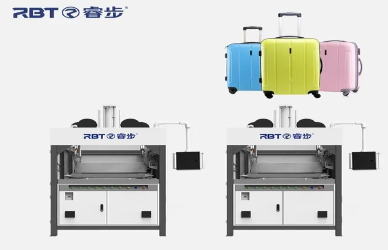
When selecting a luggage making machine, it's essential to consider your production requirements. Whether you're focusing on small-scale runs or high-volume manufacturing, the right machinery can significantly impact efficiency, costs, and product quality.
Consideration: If you’re producing a limited number of units or creating custom designs, flexibility and lower setup costs are important.
Recommended Machines: Vacuum forming machines are ideal for small batches, offering the ability to work with various materials and design features without significant initial investment. They also allow for easy adjustments between different designs.
Benefits: Low tooling costs, fast setup, and ability to produce lighter luggage designs with flexibility in material choices like ABS and polycarbonate.
Consideration: For high-volume, mass production, speed, efficiency, and consistency are critical.
Recommended Machines: Injection molding machines or automated production lines are best for large-scale operations. These machines can produce high-quality, consistent luggage shells quickly and in large quantities.
Benefits: High production capacity, minimal labor costs, and uniform product quality across large batches.
Consideration: If your factory produces customized or uniquely designed luggage, look for machines that allow for design flexibility.
Recommended Machines: Machines with adaptable settings, such as vacuum forming or CNC cutting machines, allow for more intricate designs and the ability to produce bespoke luggage.
Benefits: Ability to create personalized features, flexible designs, and detailed shapes while ensuring that material and size variations can be accommodated.
Consideration: Maintaining high quality and minimizing defects is essential, especially when producing premium luggage.
Recommended Machines: Choose machines that offer precision and consistency in production. Injection molding machines are particularly effective in providing consistent quality with fewer defects. Machines with built-in quality control features can help ensure that every unit meets your standards.
Benefits: Consistent output, minimal waste, and reduced rework costs due to fewer defects, ensuring high-quality luggage production.
When purchasing a luggage making machine, it's crucial to evaluate both the machine’s quality and the supplier’s reliability to ensure long-term performance and smooth operation.
Consideration: Look for machines with a reliable track record and long-term performance.
What to Look For: Durable construction, strong components, and positive customer reviews. Ensure the machine can handle high-volume production with minimal downtime.
Benefits: Reduces maintenance costs, downtime, and ensures consistent production.
Consideration: Ensure the supplier offers solid after-sales support.
What to Look For: Availability of maintenance services, spare parts, and staff training. A reliable supplier should offer quick responses to any issues.
Benefits: Minimizes production delays and ensures your team can operate and maintain the machine efficiently.
Consideration: Choose suppliers with comprehensive warranties and fast service responses.
What to Look For: Long-term warranties that cover critical components and quick service times.
Benefits: Protects your investment and reduces the risk of unexpected repair costs.
For small-scale production, vacuum forming machines and sewing machines are often the most cost-effective and flexible choices.
It’s essential to select machines compatible with your material types. Vacuum forming machines are great for plastics like ABS or polycarbonate, while sewing machines are suitable for fabric-based luggage.
For high-volume production, consider injection molding machines or fully automated production lines, as these machines offer high efficiency, precision, and speed.
To assess ROI, consider the initial cost of the machine, its efficiency, maintenance costs, and the long-term savings or increased output it will generate over time. Machines that increase production speed and reduce defects are more likely to offer a higher ROI.
Choosing the right luggage making machine is essential for optimizing your production process and ensuring high-quality, efficient output. By carefully evaluating factors such as machine durability, supplier support, and warranty/service offerings, you can make an informed decision that minimizes downtime and reduces operational costs. A reliable machine, paired with strong after-sales support, ensures smooth and consistent production, while a comprehensive warranty offers long-term protection. Whether you're focused on small-scale customization or large-volume production, selecting the right machine and supplier will play a critical role in meeting your factory's needs and driving business success.


