

Views: 0 Author: Site Editor Publish Time: 2025-12-16 Origin: Site
When choosing between hard-shell and soft-shell luggage, the primary differences lie in their design, durability, and functionality. Hard-shell luggage typically features a rigid, durable exterior made from materials like ABS or polycarbonate, offering superior protection for contents but with limited flexibility in terms of expansion and design. In contrast, soft-shell luggage is made from flexible fabrics such as nylon or polyester, offering greater expansion capacity and flexibility, though generally providing less protection against impacts. These differences significantly influence the manufacturing process for each type. Hard-shell luggage requires specialized molding and cutting techniques to form rigid exteriors, while soft-shell luggage focuses more on sewing, cutting, and assembly. Understanding these distinctions is essential for selecting the appropriate equipment and production methods tailored to the unique needs of each luggage type, ensuring efficiency and quality in manufacturing.
Hard-shell luggage is typically made from durable and rigid materials designed to provide maximum protection for the contents inside. The most common materials used in hard-shell luggage include:
ABS (Acrylonitrile Butadiene Styrene): Lightweight and impact-resistant, ABS is a popular choice for budget-friendly hard-shell luggage.
Polycarbonate: Known for its strength and flexibility, polycarbonate is more durable than ABS and is often used for higher-end luggage.
Polypropylene: A cost-effective material that is both durable and resistant to stress, often used for mid-range hard-shell luggage.
Extrusion:
The first step in hard-shell luggage production is creating plastic sheets through the extrusion process. This involves melting raw plastic and forcing it through a mold to create continuous sheets, which will be used to form the luggage shells.
Vacuum Forming or Injection Molding:
Vacuum Forming: The plastic sheets are heated and placed over a mold, with vacuum pressure used to shape the plastic into the rigid form of the suitcase shell.
Injection Molding: Alternatively, molten plastic is injected into a mold under high pressure, forming the luggage shell. This process is more precise and ideal for producing more complex designs and thicker walls.
CNC Cutting:
Once the shell is formed, CNC cutting machines are used to precisely trim and shape the edges and details of the luggage. This ensures that the shells have smooth, consistent edges and any necessary design features are accurately cut.
Extrusion Machines: Used to create the plastic sheets that serve as the starting material for the hard-shells.
Vacuum Forming Machines or Injection Molding Machines: These are the primary machines used for shaping the plastic into the hard-shell structure.
CNC Cutting Machines: Used for precise edge cutting and shaping to finalize the luggage shells before assembly.
Soft-shell luggage is typically made from flexible, durable materials that offer lightweight flexibility and the ability to expand. The most common materials used in soft-shell luggage include:
Nylon: A strong, lightweight, and water-resistant material often used for soft-shell luggage. It is durable and resistant to wear and tear.
Polyester: Another common fabric used for its durability and resistance to wrinkles. It is less expensive than nylon but still offers good strength and flexibility.
Canvas: A heavier, sturdier fabric often used for more rugged designs. Canvas is durable and often used in high-end or outdoor-focused luggage.
Flexible Plastic: Some soft-shell luggage incorporates flexible plastic materials for added durability and weather resistance.
Cutting and Sewing:
The first step in soft-shell luggage manufacturing is cutting the fabric or materials into precise shapes and sizes. These pieces are then stitched together using sewing machines to form the basic structure of the suitcase. The stitching ensures the pieces are securely joined, forming the outer shell of the luggage.
Assembly:
After the fabric pieces are sewn together, the luggage goes through the assembly process. This includes attaching additional components such as zippers, handles, and reinforcements (for added durability in areas like corners and edges). This stage also includes the addition of any internal features such as compartments, lining, or expansion panels.
Cutting Machines: These machines are used to precisely cut the fabric into the necessary shapes and sizes for the luggage components.
Sewing Machines: Essential for stitching the fabric pieces together, sewing machines are used to assemble the panels, add stitching details, and ensure the durability of the seams.
Assembly Machines: These machines help attach components such as zippers, handles, and reinforcements, ensuring that the soft-shell luggage is functional, durable, and ready for final inspection.
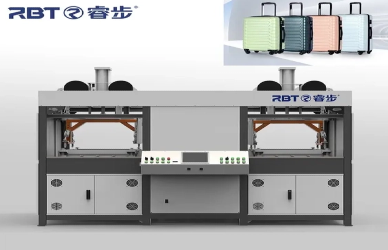
When setting up a luggage production line, choosing the right equipment is crucial to ensuring efficiency, quality, and the ability to meet production demands. Whether focusing on hard-shell or soft-shell luggage, the equipment needed varies based on several key factors, including production volume, design flexibility, and the type of luggage being produced.
Type of Luggage: The equipment required will depend on whether you’re producing hard-shell or soft-shell luggage. Hard-shell luggage requires specialized molding and shaping equipment (e.g., injection molding machines or vacuum forming machines), while soft-shell luggage relies more on sewing, cutting, and assembly machines.
Scale of Production: Determine whether you are focusing on small-scale or high-volume production. Smaller production runs may require more flexible machines like vacuum forming machines for hard-shell luggage or sewing machines for soft-shell. For large-scale operations, automated production lines or injection molding machines may be necessary for efficiency.
High-Volume Production: For large-scale operations, consider equipment that can handle high output efficiently, such as injection molding machines for hard-shell luggage or automated sewing lines for soft-shell luggage. These machines are designed to produce large quantities quickly while maintaining consistent quality.
Low to Medium Production: If your production volume is lower, machines with lower setup costs and faster turnarounds, such as vacuum forming machines or manual sewing machines, may be a better fit. These machines offer flexibility and are easier to scale up or down depending on demand.
Soft-Shell Luggage: If your focus is on customized or unique designs, soft-shell luggage may require more flexible equipment to handle different materials, shapes, and features. Sewing machines with specialized attachments and cutting machines that can work with a variety of fabrics will allow you to easily create personalized features like custom pockets, patterns, and expandable compartments.
Hard-Shell Luggage: Hard-shell production demands higher precision and specialized equipment to mold, shape, and cut the rigid materials. Machines like injection molding and CNC cutting machines provide the necessary precision for creating durable, uniform, and detailed hard-shell exteriors.
1.What is the main difference in the materials used for hard-shell and soft-shell luggage?
Hard-shell luggage typically uses rigid, durable plastics such as ABS, polycarbonate, and polypropylene. These materials are designed to provide maximum protection and strength for the contents of the luggage. In contrast, soft-shell luggage is made from flexible fabrics like nylon and polyester, often combined with flexible plastics. Soft-shell luggage offers flexibility and expandability, making it suitable for different storage needs and easier to compress during storage or travel.
Hard-shell luggage manufacturing is more complex due to the need for specialized molding processes such as vacuum forming or injection molding, which require precise machinery to shape rigid materials into durable, impact-resistant shells. These processes involve high-precision equipment and longer setup times. On the other hand, soft-shell luggage manufacturing is simpler, primarily involving cutting, sewing, and assembly of fabric components, making it less intricate and faster to execute.
3.Can the same equipment be used for both hard-shell and soft-shell luggage production?
No, different equipment is required for each type of luggage. Hard-shell luggage necessitates machinery such as extrusion machines, vacuum forming, and injection molding machines to create the rigid, durable shells. In contrast, soft-shell luggage relies on equipment like sewing machines, cutting machines, and assembly machines for stitching fabric and attaching components like zippers and handles. Each type of luggage requires specialized equipment tailored to its unique production process.
Soft-shell luggage is generally faster to produce because its manufacturing process is less complex. The production mainly involves cutting and sewing fabrics, which can be done quickly and efficiently. In contrast, hard-shell luggage involves more detailed and time-consuming processes, including molding, forming, and cutting rigid materials, which takes longer and requires more precision to achieve the desired durability and design.
In summary, hard-shell and soft-shell luggage differ significantly in their manufacturing processes. Hard-shell luggage requires specialized equipment like extrusion machines, vacuum forming, and injection molding machines to create rigid, durable shells, while soft-shell luggage relies on sewing, cutting, and assembly for its fabric-based construction. These differences make the selection of the right equipment crucial, as each type of luggage demands specific machines that match its material and production requirements. Looking to the future, trends in automation will streamline production, making both hard-shell and soft-shell luggage manufacturing faster and more efficient. Additionally, the shift toward eco-friendly materials and the integration of smart features like built-in tracking and charging systems will continue to shape the luggage industry, making it more sustainable and functional for consumers. As these innovations progress, choosing the appropriate equipment and staying ahead of these trends will be key to maintaining competitiveness in the luggage manufacturing market.


