

Views: 0 Author: Site Editor Publish Time: 2026-01-05 Origin: Site
CNC machines are vital for modern manufacturing. They offer precision and flexibility. 5-axis and 7-axis machines are designed to create detailed parts. The key difference is the extra axes, offering more precision, flexibility, and speed.In this article, we’ll compare the 5-axis and 7-axis CNC machines. You’ll learn which one fits your manufacturing needs.At RBT, we offer precision CNC machines for various applications. Learn more about our products today!
A 5-axis CNC machine operates by moving the cutting tool along five axes. The first three axes—X, Y, and Z—control the movement in a linear fashion, allowing for vertical and horizontal positioning. The additional two axes, usually denoted as A and B (or sometimes C), allow the tool to rotate around the part. This movement makes 5-axis machines particularly effective at producing parts with complex geometries, reducing the need for manual repositioning and multiple setups. These capabilities enable high-precision work on intricate components like turbine blades and medical implants.
5-axis CNC machines offer several advantages:
● Fewer setups: They allow manufacturers to machine multiple sides of a part in a single setup, saving time and reducing errors.
● High precision: These machines produce parts with exceptional accuracy, essential for industries like aerospace and medical device manufacturing.
● Complex parts: Capable of creating intricate parts that would be difficult or impossible for 3-axis machines to produce. This makes them indispensable in industries requiring high levels of detail.
5-axis CNC machines are used in industries that require both precision and the ability to create complex parts:
● Aerospace: For parts like turbine blades and engine components.
● Medical: To produce surgical tools, implants, and other specialized devices.
● Automotive: For creating performance parts, molds, and prototypes.

A 7-axis CNC machine expands on the capabilities of a 5-axis machine by adding two additional rotational axes (often C and D). These extra axes allow for more complex and precise movements. The increased number of axes means that 7-axis CNC machines can access more angles, providing greater flexibility when machining parts. For example, when machining deep cavities or intricate internal features, these machines can approach the part from more directions, ensuring smoother cuts and higher precision.
The added axes of a 7-axis CNC machine provide:
● Greater flexibility: More angles of approach mean that the machine can handle more complex shapes with ease.
● Enhanced precision: The extra axes contribute to more accurate machining of parts with deep features or complex geometries.
● Reduced setups: With additional movement capabilities, 7-axis machines further minimize the need for multiple setups, which helps speed up production and improve efficiency.
7-axis CNC machines are particularly beneficial in industries where high-precision and complex parts are essential:
● Aerospace: For producing parts with internal features, such as turbine blades or aircraft components.
● Medical: For manufacturing custom implants and tools that require precise internal features and contours.
● Defense: To produce critical components where tight tolerances and high performance are necessary.
The primary difference between 5-axis and 7-axis CNC machines lies in their range of movement. A 7-axis machine offers greater flexibility, enabling it to handle more complex parts with intricate internal features. The additional axes allow for more detailed and precise work, especially when it comes to parts requiring undercuts, deep cavities, or multi-directional cutting.
Both 5-axis and 7-axis CNC machines reduce the number of setups required for machining parts. However, 7-axis machines offer even greater efficiency by eliminating the need to reposition parts multiple times. This further reduces production time and ensures that parts are machined with minimal human intervention, which is beneficial in high-volume manufacturing environments.
The added complexity of 7-axis CNC machines often results in a higher cost. These machines require advanced software, more detailed programming, and more specialized training to operate. Additionally, the initial investment for a 7-axis machine is higher, making it a more costly option for businesses on a tight budget. However, for industries that require highly complex parts, the increased flexibility and precision of 7-axis machines make them a worthwhile investment.
Feature | 5-Axis CNC Machine | 7-Axis CNC Machine |
Flexibility | Limited to five axes of movement | Additional axes allow for more flexibility and precision |
Complexity | Suitable for moderately complex parts | Ideal for highly intricate parts with deep cavities or undercuts |
Precision | High precision for medium-complexity parts | Enhanced precision for more complex geometries |
Setup Efficiency | Fewer setups than 3-axis, but more than 7-axis | Fewer setups, reducing production time further |
Cost | Lower cost, more affordable for many businesses | Higher cost due to additional axes and complexity |
5-axis CNC machines are known for their speed and accuracy in producing parts with moderate complexity. They are capable of achieving high precision, but their speed is often limited by the complexity of the part being machined. For many applications, such as automotive and general manufacturing, 5-axis machines provide the ideal balance of efficiency and precision.
7-axis CNC machines excel in both speed and accuracy, especially for parts with more complex geometries. The additional axes enable them to machine intricate parts faster and more accurately, which is particularly useful in industries like aerospace and medical manufacturing where precision is critical. The ability to perform complex tasks in a single setup reduces both cycle time and the risk of errors, resulting in more efficient production.
5-axis CNC machines can cut a wide variety of materials, including metals like aluminum, stainless steel, and titanium. They are also capable of machining plastics and composites, making them suitable for a diverse range of applications. In industries such as automotive and medical device manufacturing, the ability to machine materials with high precision is essential.
7-axis CNC machines can handle the same range of materials as 5-axis machines but are particularly effective when working with harder or more complex materials. Superalloys, titanium, and composites often require more advanced machining capabilities, making 7-axis machines the ideal choice for industries like aerospace, where materials are often tougher to machine. The additional axes allow 7-axis machines to achieve smoother cuts on these difficult materials, resulting in higher-quality parts.
Material Type | 5-Axis CNC Machine | 7-Axis CNC Machine |
Metals | Aluminum, stainless steel, titanium | Superalloys, titanium, hard metals |
Plastics | Acrylic, nylon, polycarbonate | Advanced composites and high-performance plastics |
Composites | CFRP, GFRP | CFRP, GFRP, with more intricate cutting |
Advanced Materials | Ceramics, graphite | Ceramics, glass, harder-to-machine materials |
A 5-axis CNC machine is suitable for applications that involve moderate complexity and precision. It is ideal for industries like automotive, where parts may require intricate shapes but don't involve highly complex internal features. For manufacturers on a budget or those requiring quick turnarounds, 5-axis machines are often the most cost-effective choice.
A 7-axis CNC machine is best for high-precision applications that involve complex geometries, deep cavities, or intricate internal features. Industries like aerospace, medical devices, and defense benefit from the flexibility and precision offered by 7-axis machines. If your production involves complex parts requiring multi-directional cutting, a 7-axis machine will likely be the best choice.
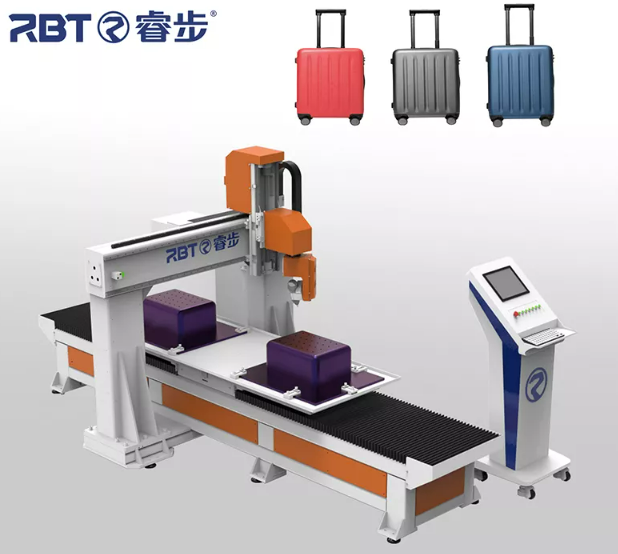
The cost of a 5-axis CNC machine is significantly lower than that of a 7-axis machine. Typically, a 5-axis machine will cost between $150,000 and $500,000, depending on its capabilities and configuration. This makes 5-axis machines a more accessible option for small to medium-sized manufacturers.
7-axis CNC machines are more expensive, with prices often exceeding $500,000 and reaching up to $1.2 million for advanced models. The higher cost reflects the added capabilities and precision offered by the additional axes. For industries requiring highly complex parts, the investment in a 7-axis machine can provide long-term value in terms of increased efficiency and quality.
Cost Factor | 5-Axis CNC Machine | 7-Axis CNC Machine |
Initial Investment | $150,000 - $500,000 | $500,000 - $1.2 million |
Operational Costs | Lower operational costs | Higher due to complexity and tooling |
Maintenance Costs | Moderate maintenance costs | Higher maintenance due to added axes and complexity |
Return on Investment | Quick ROI due to lower initial costs | Longer ROI, but high efficiency in complex parts |
5-axis CNC technology continues to evolve, with improvements in both machine accuracy and speed. Newer machines feature better control systems, software updates, and enhanced cutting tools that make it easier to machine more complex parts.
7-axis CNC machines are also benefiting from technological advancements. Innovations in automation, AI integration, and real-time feedback systems are improving the overall efficiency and precision of these machines. As industries continue to demand more complex and customized components, 7-axis machines will become even more essential for achieving these goals.
Both 5-axis and 7-axis CNC machines offer unique advantages. 5-axis machines are cost-effective and perfect for moderate complexity. However, 7-axis CNC machines provide superior flexibility, precision, and speed for complex parts. Understanding these differences helps businesses choose the right machine for their needs. At RBT, we offer precision CNC machines designed to meet the demands of various industries, ensuring high-quality production and efficiency.
A: A 5-axis CNC machine has five axes of movement, while a 7-axis CNC machine includes two additional rotational axes for greater flexibility and precision.
A: A 7-axis CNC machine is ideal for highly complex parts with intricate geometries, offering superior precision and reducing setup time compared to 5-axis machines.
A: Yes, both can handle materials like metals, plastics, and composites. However, 7-axis machines are better suited for more complex materials and parts with internal features.
A: Industries like aerospace, medical, and defense benefit from 7-axis CNC machines due to their ability to handle highly detailed parts with deep cavities and internal geometries.


